Grand Rapids, MichiganLet's talk. (616) 551-0680

The method · Grand Rapids, MI

Five ways of knowing before one adjustment

The Gonstead System is a complete method of chiropractic analysis developed by Dr. Clarence Gonstead in Mount Horeb, Wisconsin, and refined over five decades of practice. Its founding conviction is simple: never adjust what you have not examined, and never guess. Only a few chiropractors in the Grand Rapids area practice it. Dr. Connor Knapp, D.C. is an active member of the Gonstead Clinical Studies Society, has attended 17 Gonstead seminars, and built his whole practice on it.

Book my first visit
1

Full-spine X-ray

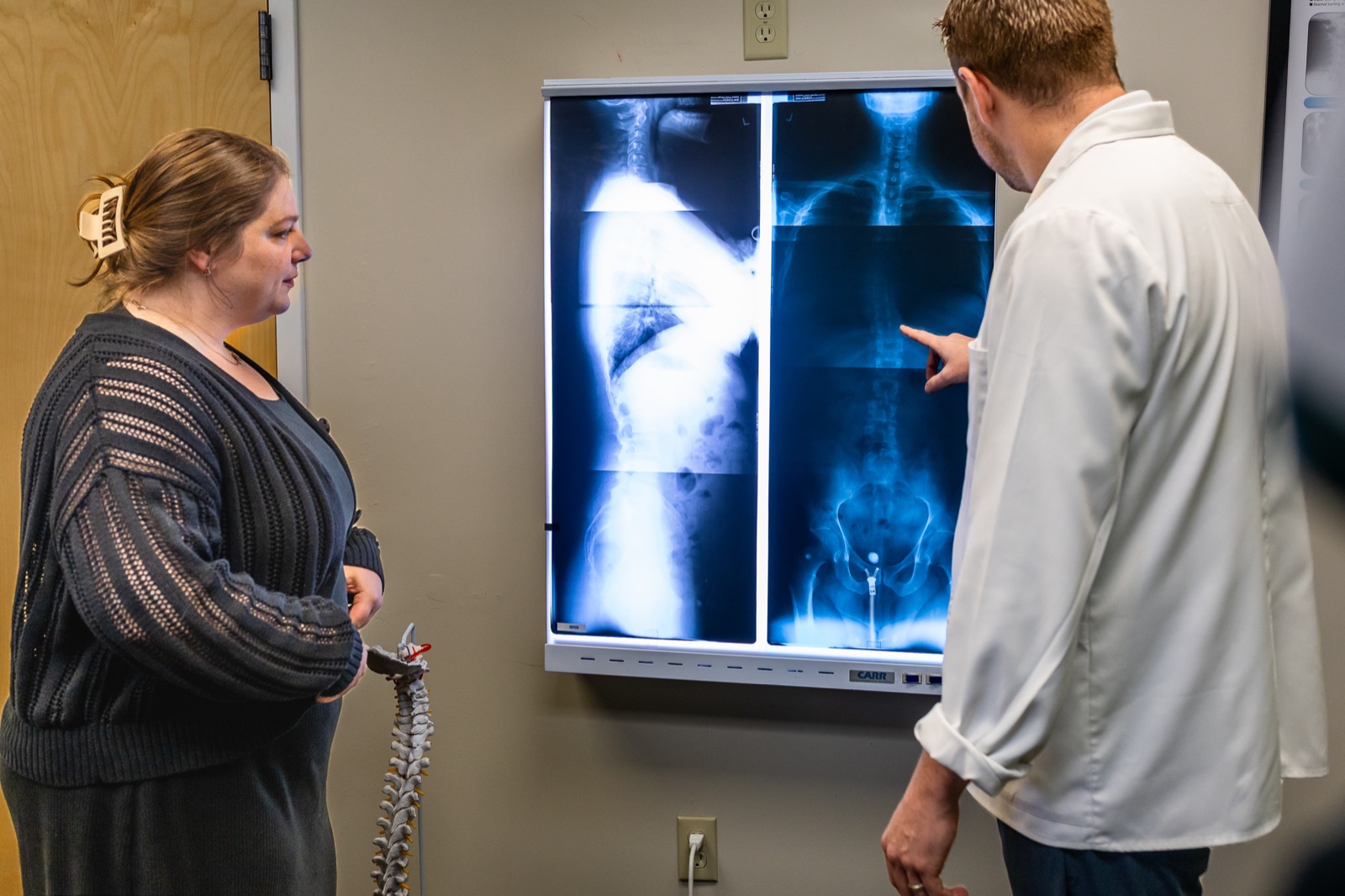
Most trouble in a spine hides at one or two segments while everything around them compensates. A full-spine film shows the whole structure at once: alignment, disc spacing, posture under real gravity. It is the map the rest of the exam is checked against, and it is why a Gonstead adjustment is aimed rather than guessed.

Dr. Connor Knapp pointing at findings on a lit full-spine X-ray with a patient
2

Instrumentation

A dual-probe instrument is drawn down the spine reading heat, because inflammation runs warm. It does not care how anyone feels that day and it cannot be imagined into a finding. When the instrument flags the same segment the X-ray questioned, the exam is closing in.

Close-up of the Nervoscope instrument tracing a patient’s spine
3

Static palpation

Careful hands over each segment, feeling for swelling, tenderness, and changes in the tissue. Slow, specific, and done every visit, because a spine is not the same two weeks running.

4

Motion palpation

Each joint is moved through its range to feel which segments glide and which are stuck. Two segments can look identical on film and behave completely differently under motion. This is where the direction of the adjustment comes from.

5

Visualization

How you stand, walk, sit, and carry yourself, read against everything above. The trained eye cross-checks every other finding, every single visit.

Why all five, every time

Any one finding can mislead. A sore spot is not always the problem spot, and the segment that hurts is often the one compensating for the one that failed. When the X-ray, the instrument, both palpation exams, and the visual read all point at the same segment, that is the one that gets adjusted, in the exact direction it needs. Nothing else gets touched.

That is the whole difference. Not a stronger adjustment, a more specific one, and for most patients specificity is what they had never gotten before.

Experience the difference

This page describes a method of chiropractic analysis and care. It is general information, not medical advice, and results vary from person to person. Dr. Connor Knapp, D.C. refers patients for medical evaluation when examination findings call for it.